



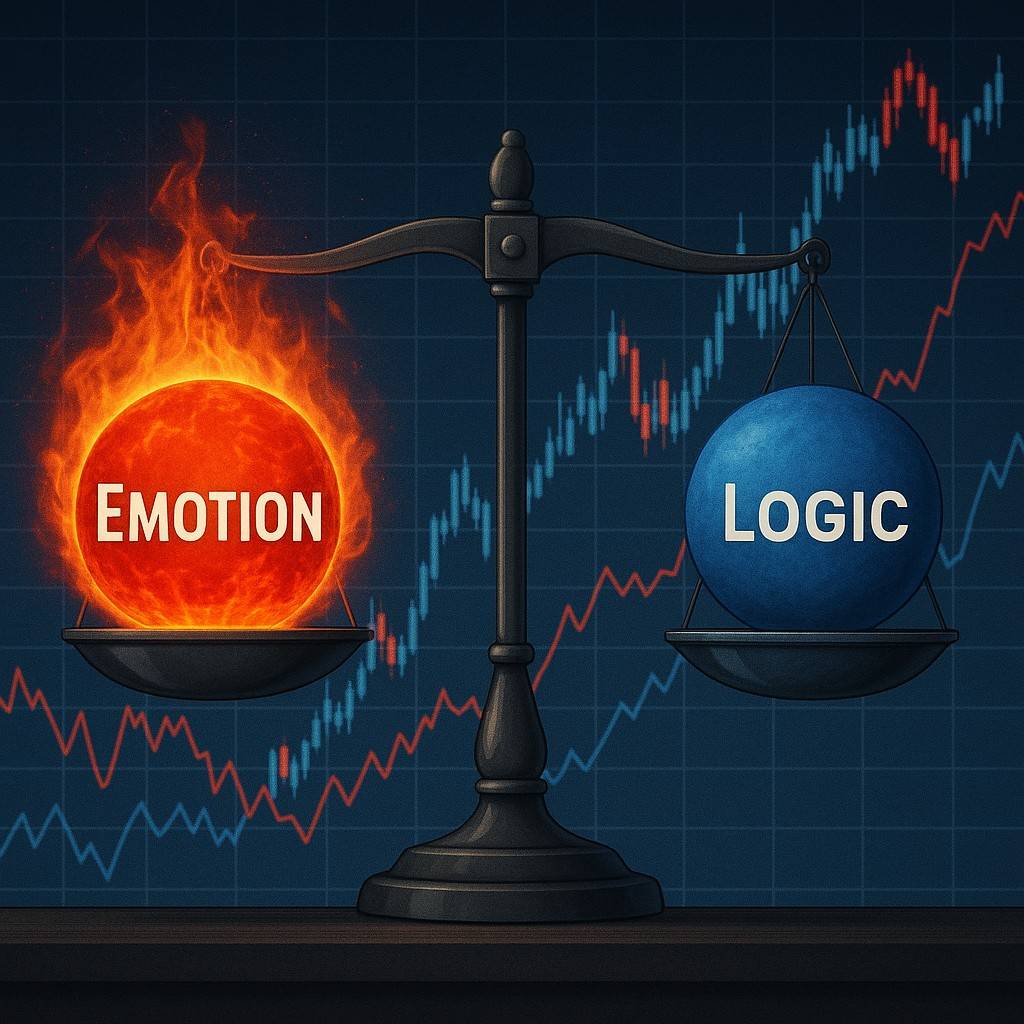

Navigating the financial markets is more about mastering your mind than mastering charts. In “Trading in the Zone,” Mark Douglas distills decades of firsthand experience into 15 essential rules that transform trading from a game of chance into a disciplined, probability-based profession. For new traders—95% of whom fail in their first year—this book offers the trader’s mindset, not just another set of technical indicators.
Why New Traders Must Read This Book
New traders should read Trading in the Zone because it goes far beyond teaching entries and exits—it addresses the psychological barriers that cause 95% of traders to fail. What makes Mark Douglas’s book truly special is:
- A “Gem” Born of a Lifetime’s Research
Douglas spent over 17 years dissecting trading psychology. His insights come not from theory alone but from personal failure (losing nearly everything by 1981) and triumph as a trader, Merrill Lynch broker, author, lecturer, and trading coach. - A Focus on the Trader’s Mindset
Whereas most trading books repurpose old market-analysis techniques, Douglas shows why the skills that succeed in school or business often hamper trading performance. He teaches the “trader’s mindset”—learning to think in probabilities, accept uncertainty, and detach emotionally from each outcome. - Proven Coaching Experience
After publishing his first book in 1990, Douglas founded Trading Behavior Dynamics and has personally coached every kind of trader—floor traders, hedgers, CTA’s, brokers, and novices—around the globe. His real-world approach has transformed countless struggling traders into consistent winners.
By tackling the inner game of trading—fear of being wrong, risk acceptance, and mental flexibility—Trading in the Zone equips new traders with the self-trust and discipline needed to survive losses, follow their edge, and ultimately join the elite 5% who trade profitably over the long run.
The 15 Essential Rules from “Trading in the Zone”
1. Embrace Uncertainty and Risk
Trading is inherently uncertain; true mastery starts when you stop needing to predict the future and focus on what you can control.
“You don’t need to know what’s going to happen next to make money… Anything can happen… Every moment is unique, meaning every edge and outcome is truly a unique experience.”
2. Think in Probabilities
Each outcome is only one in a series; the edge comes from playing the odds, not seeking guarantees.
“Traders must learn to think in terms of probabilities and to surrender all of the skills we have acquired to achieve in virtually every other aspect of our lives.”
3. Losses Are Unavoidable
You can’t win every trade—accepting losses as part of the process sets elite traders apart.


“Losses are an unavoidable component of trading.”
4. Define Your Risk Upfront
Never enter a trade without knowing exactly how much you’re prepared to lose.
“My risk is always defined before I enter a trade.”
5. Detach from Outcomes
Don’t let the result of a single trade affect your emotions, strategy, or self-worth. Each trade is just one of many.
“The trade either works or it doesn’t; in any case, you wait for the next edge to appear and go through the process again and again.”
6. Market Analysis Alone Is Not Enough
More or better analysis won’t solve your trading problems; your mindset will.
“More or better market analysis is not the solution to trading difficulties or lack of consistent results.”
7. Results Are Psychological
It’s your attitude and mental state that ultimately shape your trading results, not just your strategy.
“It’s his attitude and state of mind that determines results.”
8. Trust Your Edge
If you have a tested strategy, execute it with confidence and without second-guessing.
“You must learn to trust your edge. The greater your confidence, the easier it will be to execute your trades.”
9. The Market Is Neutral
Markets are neither good nor bad—they simply are. Any meaning or emotion attached is your own projection.
“These are not market generated errors … they are strictly the result of what I call faulty trading attitudes and perspectives … The market is neutral in the sense that it moves and generates information about itself. Movements and information provide us opportunity, but that’s all.”
10. Your Attitude Determines How You Experience Loss
Painful experiences come from your personal attitudes—shift your mindset and your perception of loss will change.
“It rarely occurs to us that the source of our trading difficulties is internal, derived from our state of mind.”
11. True Acceptance of Risk
Great traders accept risk fully and without hesitation, freeing themselves from fear and regret.
“The best traders can put on a trade without hesitation or conflict and just as freely admit it isn’t working without the slightest bit of emotional discomfort.”
12. Avoid Trading Fears
Recognize and manage the four main fears: being wrong, losing money, missing out, and leaving money on the table.
“Ninety-five percent of the trading errors you are likely to make … stem from your attitudes about being wrong, losing money, missing out, and leaving money on the table—what I call the four primary trading fears.”
13. Focus on Process, Not Perfection
The process—spotting profitable opportunities and executing them—is more important than the outcome of any single trade.
“Traders must learn to focus on the information that helps them spot opportunities … rather than focusing on the information that reinforces their fears.”
14. Consistency Comes from Self-Belief
Long-term results come from believing in your own consistency and discipline.
“The most important component in a trader’s ability to accumulate money over time is having a belief in his own consistency.”
15. Develop Mental Flexibility
Adaptability is critical: no set of rules will ever work forever in an ever-changing market.
“Trading successfully requires a degree of mental flexibility far beyond the scope of most people.”
Conclusion
Mark Douglas’s rules, as expressed throughout “Trading in the Zone,” offer a blueprint for transforming trading from a game of chance and emotion into a disciplined, probability-based profession. By understanding and adopting these rules, traders can start to “think in the zone”—where profits are not won by prediction, but by preparation, discipline, and psychological mastery.